Vine Parquet Flooring
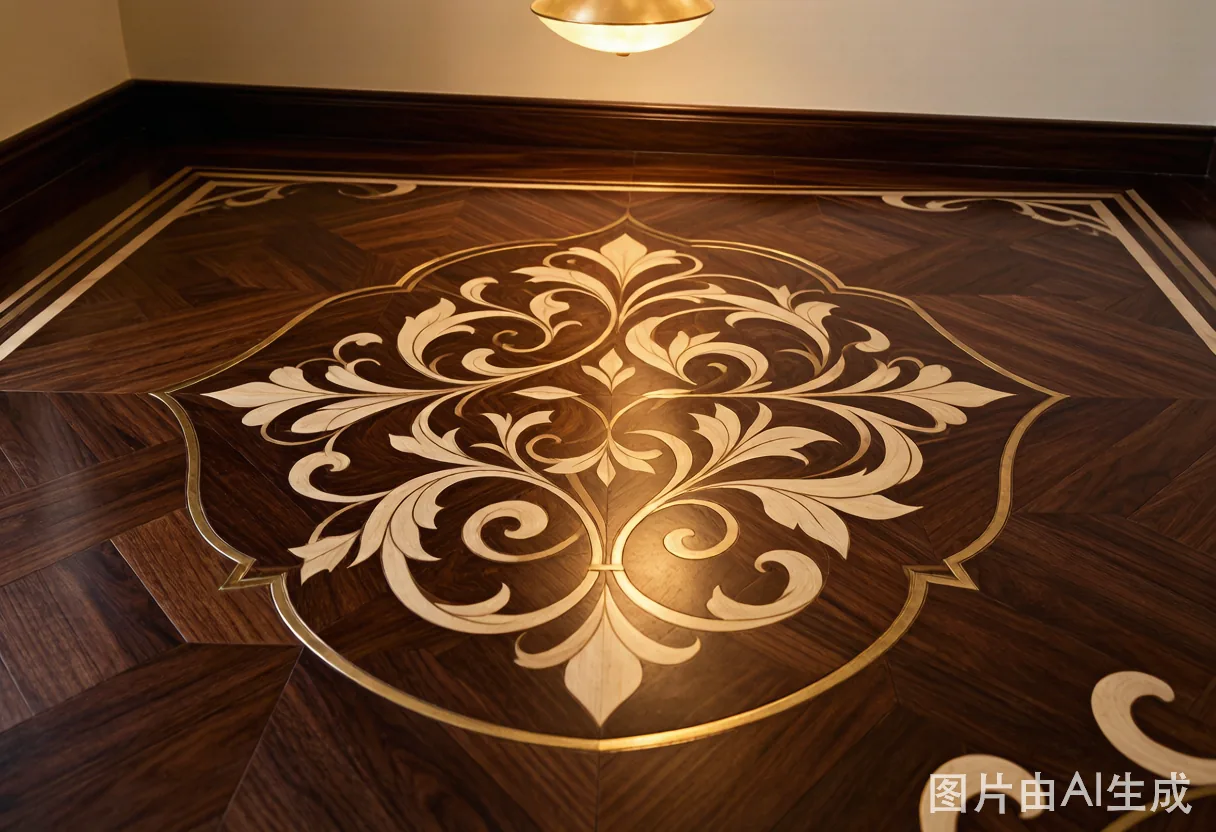
A walnut, maple and brass inlay flooring concept for Middle Eastern Majlis rooms and luxury villa interiors.
The brief.
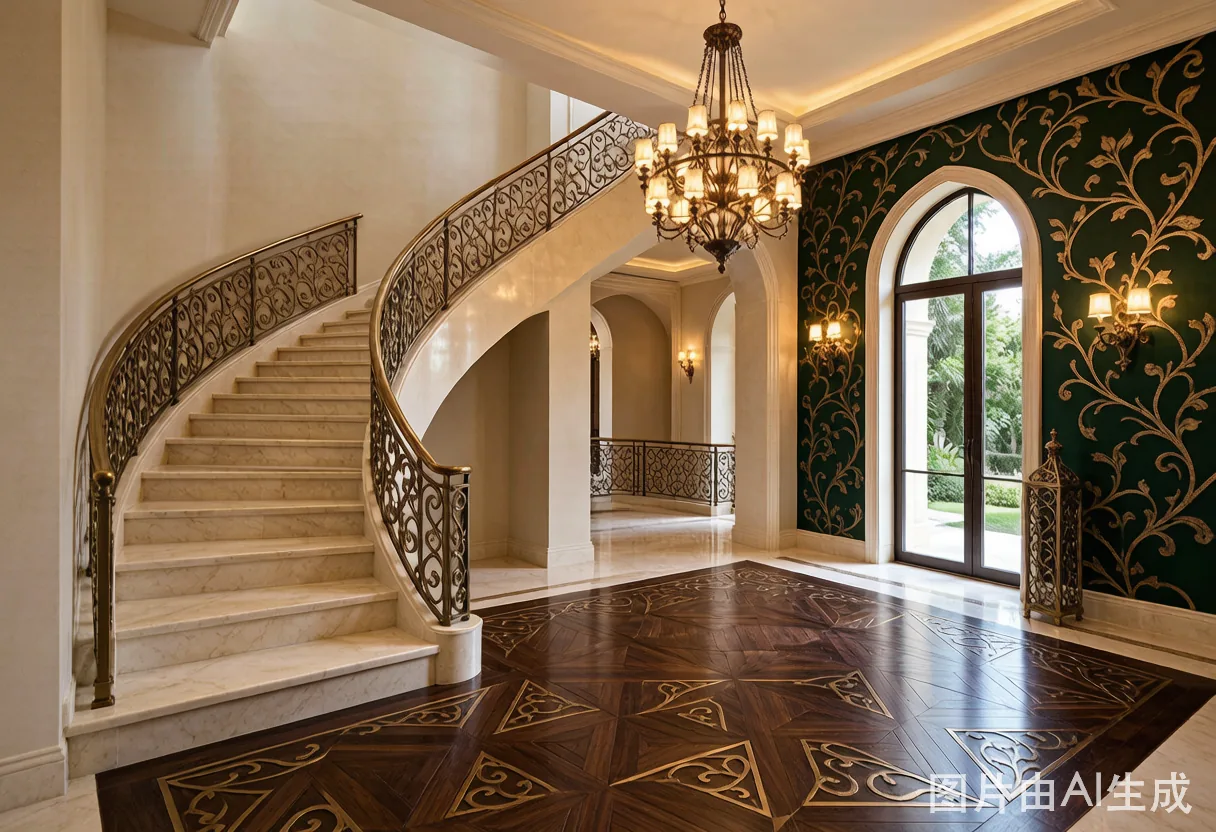
This concept translates the flowing rhythm of traditional vine patterns into a buildable parquet flooring system. Designed for Majlis rooms, villa entrances and hospitality lounges, the surface balances ornamental richness with contemporary restraint — a floor that feels cultural, continuous and architectural.
- —Target space: Majlis rooms, villa entrances, hotel lounges, dining rooms
- —Target customer: private villa owners, hospitality projects, designers
- —Cultural direction: Chinese chan-zhi vine meets Arabic eight-point star
- —Material direction: dark walnut field, cream maple inlay, antique brass line
- —Visual mood: dark luxury, warm gold light, restrained ornament
Where the vine comes from.
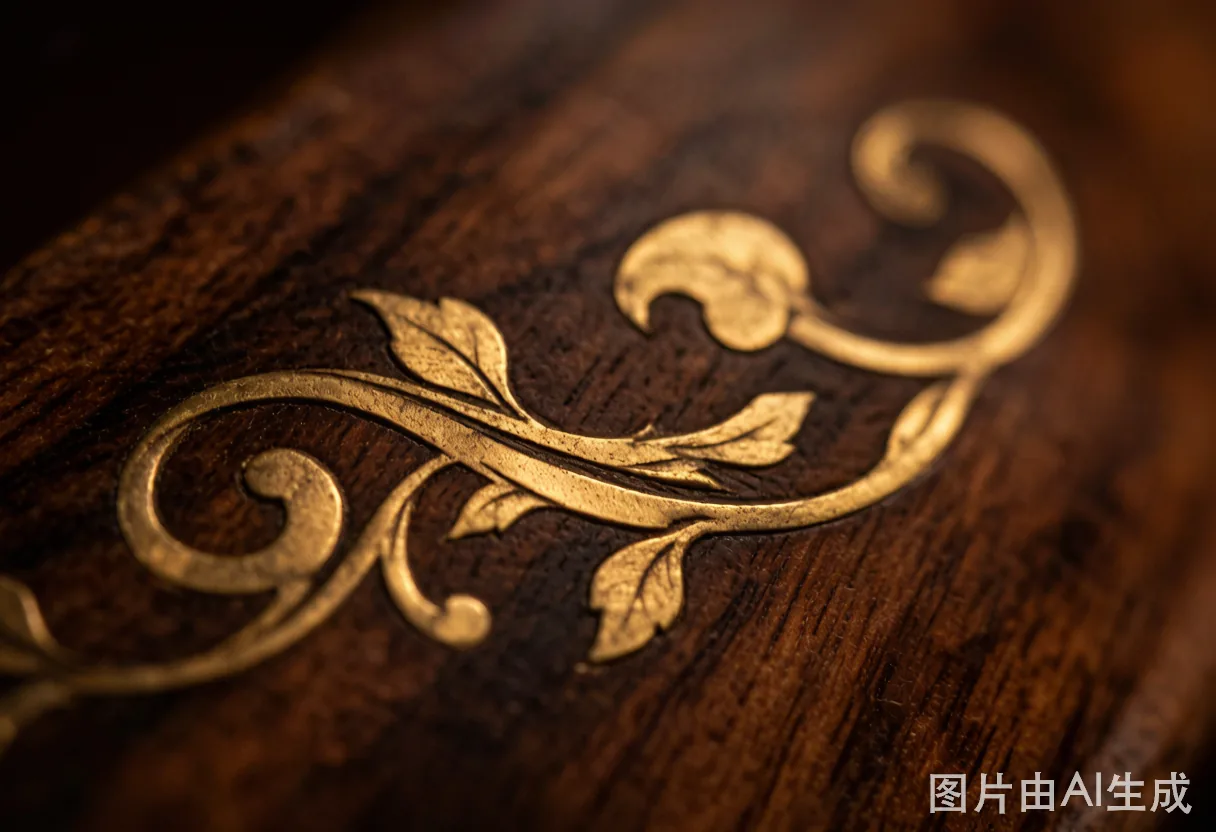
The design begins with the scrolling vine — a continuous S-curve with peony buds and curling leaves that has run through Chinese decoration for over 1,300 years. Its curve, leaf rhythm and flower nodes are simplified into a repeatable flooring unit that can work as a central medallion, border or full-field surface. The same vine is then embedded inside an Arabic eight-point star grid, giving the floor symmetric order the Gulf audience expects, while keeping the flowing life Chinese craft is known for.
From motif to material.
Six steps take the vine from a traditional line drawing to a buildable surface — the same method across all hi9 works.
Extract vine curve
Pull the main S-curve from traditional chan-zhi — the mother line that carries the whole pattern.
Simplify leaf rhythm
Reduce curling leaves to a minimum repeatable unit — two leaves per node, mirrored.
Define flower node
Adapt the peony bud as the central accent — the moment the vine ‘blooms’ on the floor.
Build repeat system
Tile the unit into border, medallion and full-field layouts from one motif.
Embed star grid
Drop the vine inside an eight-point star framework for Arabic geometric order.
Adjust scale for walking
Tune the pattern to 900×900mm so it reads at 1.5m walking distance — not too busy, not too sparse.
The right material.
Dark Walnut
Main field — depth, warmth, the bone of the floor.
Cream Maple
Contrast inlay — the vine line that catches the eye.
Antique Brass
Luxury highlight — catches warm Middle Eastern light.
Turquoise Accent
Optional regional accent — a small nod to Gulf color tradition.
Matte UV Oil
Finish — preserves wood breath, resists wear.
Plywood Core
18mm counter-woven core — resists Gulf dry-heat-cold-shock.
The vine, in space.
Each rendering drops the design into a real Middle Eastern interior — so you can see the vine walk, lean and live before any material is cut.
Buildable, not just beautiful.
Bring this vine to your surface.
Customize this pattern for your project — or ask for material suggestions tailored to your space, budget and timeline.