From chan-zhi vine to wood floor surface.
A complete deconstruction study: how a 1,300-year-old Chinese scrolling vine motif is collected, extracted, simplified, vectorized, repeated and applied to four wood floor craft techniques — carving, embossing, UV printing and parquet marquetry.
Collection
Extraction
Simplification
Reconstruction
Repeat
Adaptation
Rendering
Statement
Collecting the vine lineage.
The design begins with field collection of traditional chan-zhi vine references — from Tang and Song dynasty ceramics, silk textiles, palace architecture and museum archives. The goal is to gather enough variants to identify the shared visual DNA: the continuous S-curve, the peony bud node, the curling leaf, the endless growth rhythm.
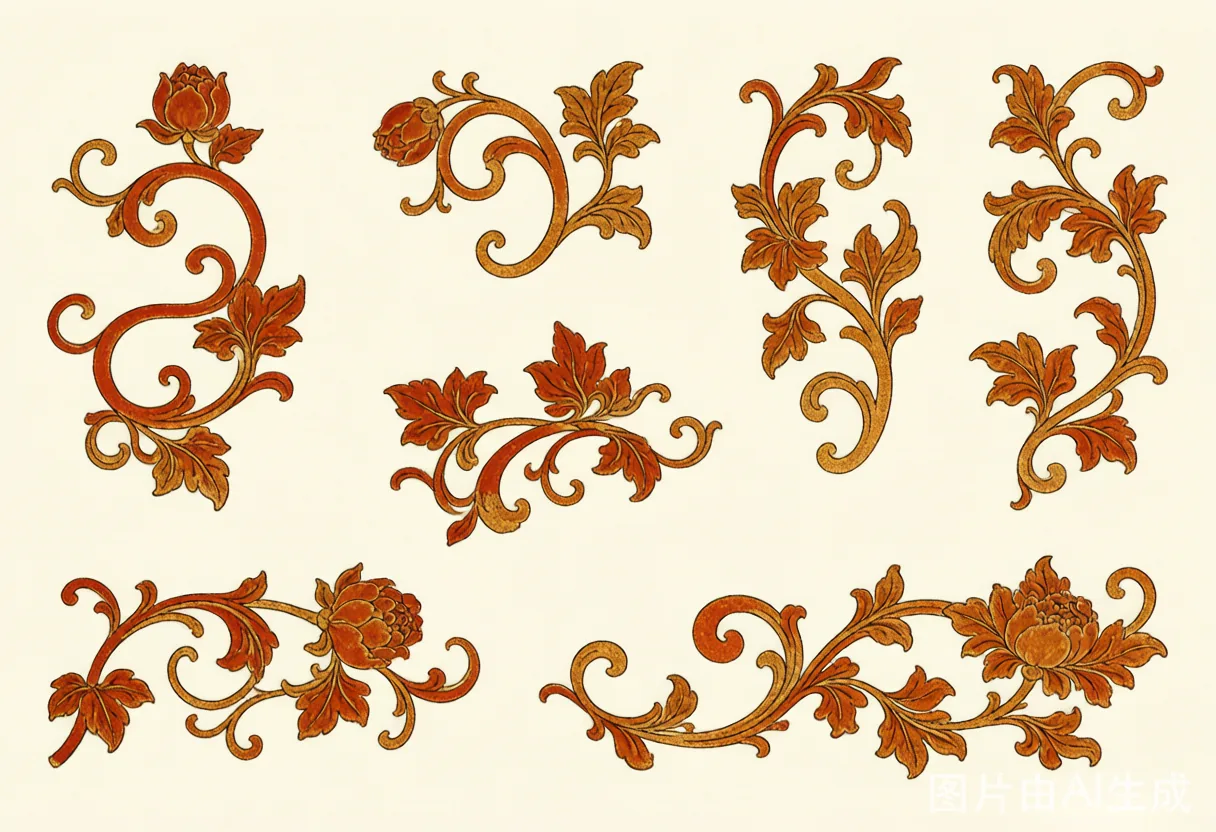
Reference plate — 6 classic chan-zhi vine variants from Tang & Song dynasty ceramics and silk textiles.
Source Range
Tang ceramics, Song silk, Ming furniture, Qing palace decoration — 1,300+ years of vine lineage surveyed.
Shared DNA
Across all variants, three features are constant: S-curve main vine, peony flower node, curling leaf pair.
Selection Rule
Pick motifs where the vine flows without clear start/end — the “continuous growth” is non-negotiable.
Isolate the mother motif.
From the reference plate, a single mother motif is isolated — one continuous S-curve vine carrying one peony bud and two curling leaves. This is the minimum repeatable unit. Everything that follows is built from this one drawing.
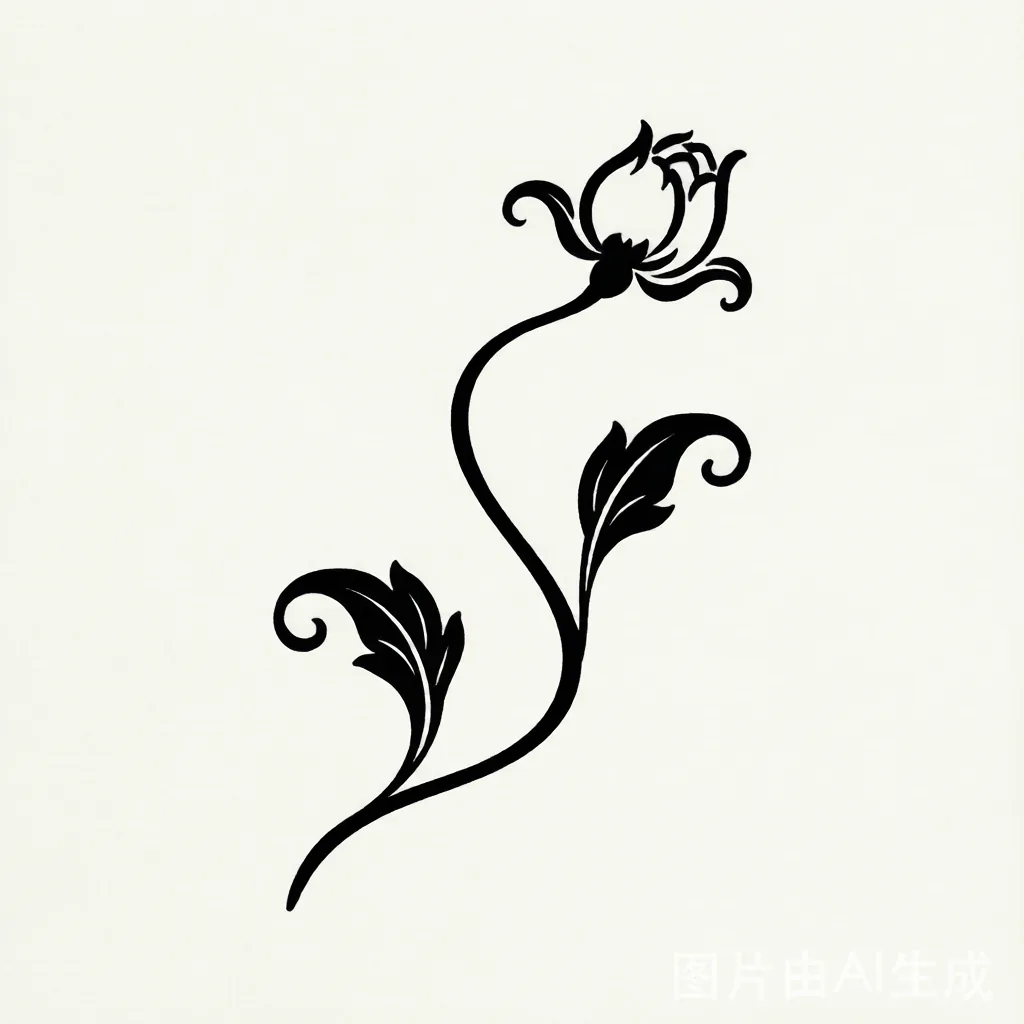
The mother motif — one S-curve, one peony bud, two leaves. The seed of the whole surface system.
Deconstruct into three parts.
The mother motif is deconstructed into three independent elements: the vine curve (the main movement), the leaf shape (the rhythm marker) and the flower node (the accent moment). Each element is drawn separately, studied alone, then reassembled.
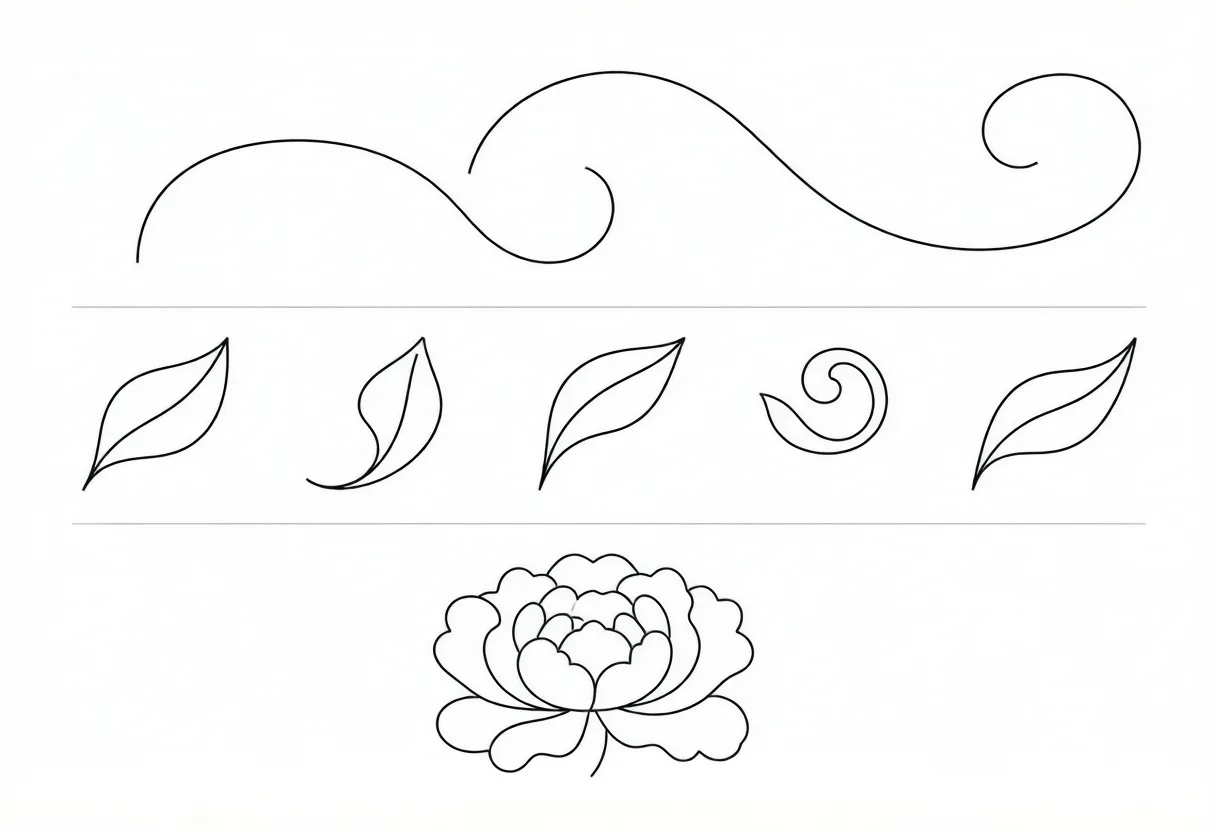
Extraction study board — vine curve (top), leaf (middle), flower node (bottom), each isolated as a clean line.
Vine Curve · 主藤线
The continuous S-curve is the spine. It carries the “endless growth” meaning and defines the flow direction of the whole pattern.
Leaf Shape · 叶片
The curling leaf pair marks rhythm along the vine. Simplified to a mirrored teardrop, it becomes a repeatable beat.
Flower Node · 花心
The peony bud is the accent — the moment the vine “blooms.” It anchors the eye and marks the repeat point.
Reduce curves to essentials.
The organic vine is progressively simplified through four reduction stages — from the original hand-drawn curve to a minimal set of bezier paths. The goal is to preserve the “continuous, growing, twining” form feature while making the pattern producible by machine. A pattern too complex for the production line is not a design — it is a wish.
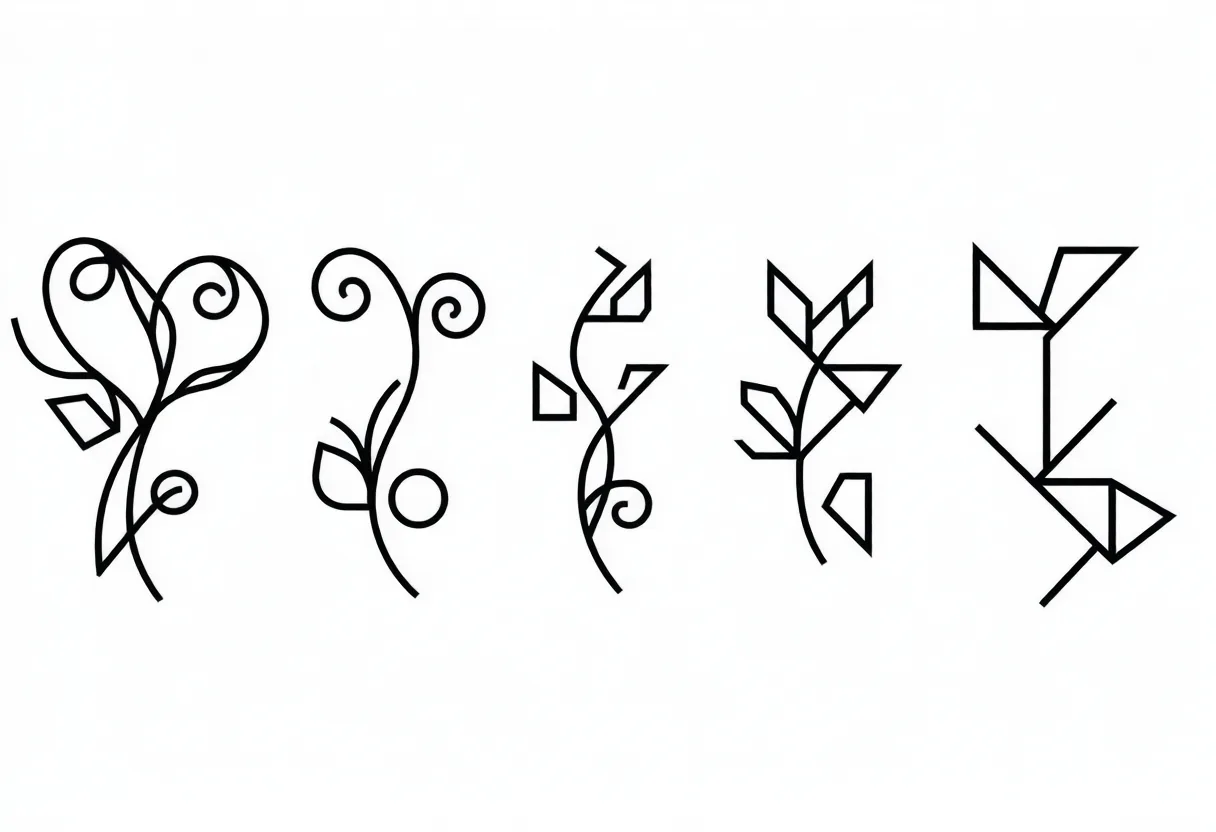
Simplification study — original (left) → 4 reduction stages → minimal vector curve (right).
Continuous · 连续
The S-curve must stay unbroken. No matter how much we simplify, the vine never starts or stops — it flows.
Growing · 生长
The curve must still feel like it is reaching forward. The leaf direction and bud angle preserve the “growth” read.
Twining · 缠绕
The leaf pair must still curl around the vine. The “twining” is what makes chan-zhi read as chan-zhi, not as a generic scroll.
Rebuild as a clean vector.
The simplified curve is rebuilt as a clean vector path — smooth beziers, visible anchor points, scalable without loss. This is the master line that will drive every downstream craft: laser cutting, CNC routing, UV print heads, marquetry inlay channels. One vector, four crafts.
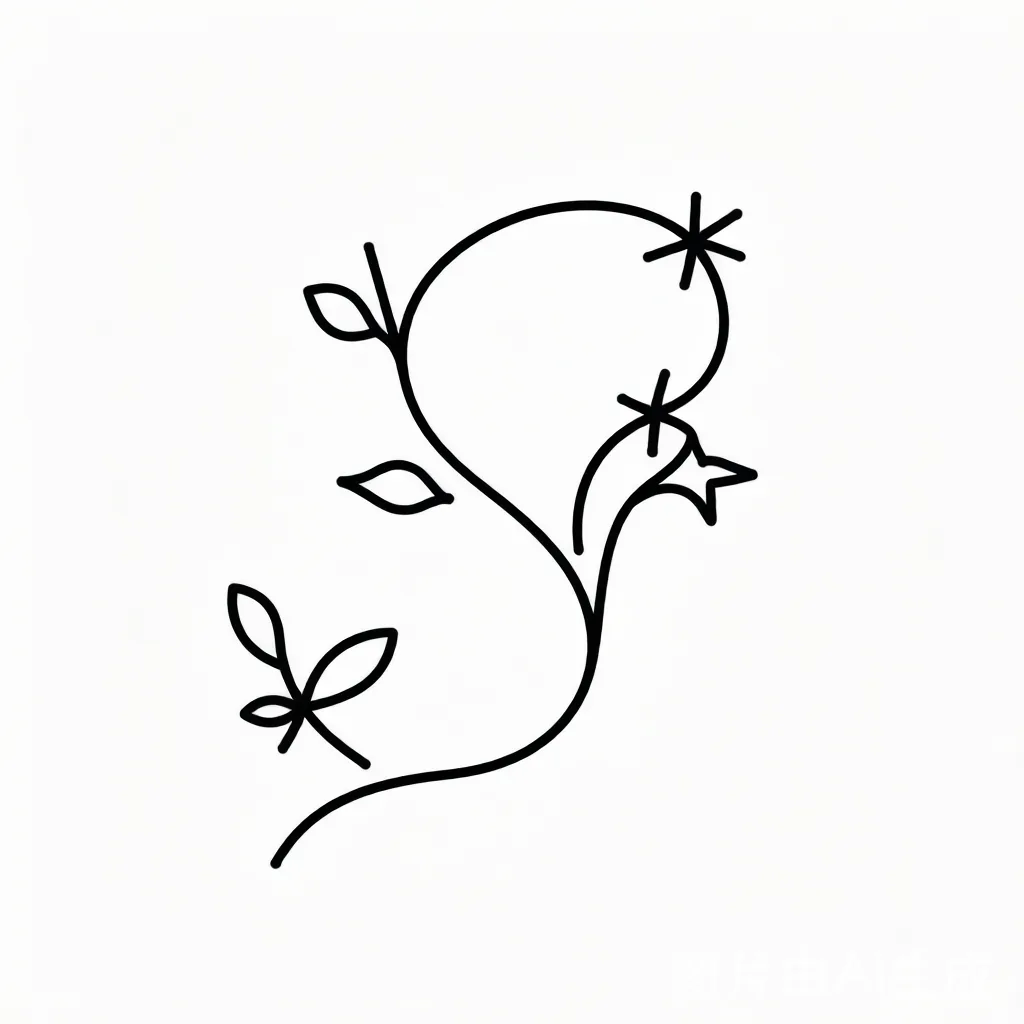
The master vector — clean bezier paths, anchor points visible. The single source of truth for all four craft techniques.
Tile into an endless border.
The mother motif is mirrored and tiled into a continuous border strip. The vine flows from one unit into the next without a visible seam — the “continuous” form feature is now literal. This border repeat is the first of three layout types we test.
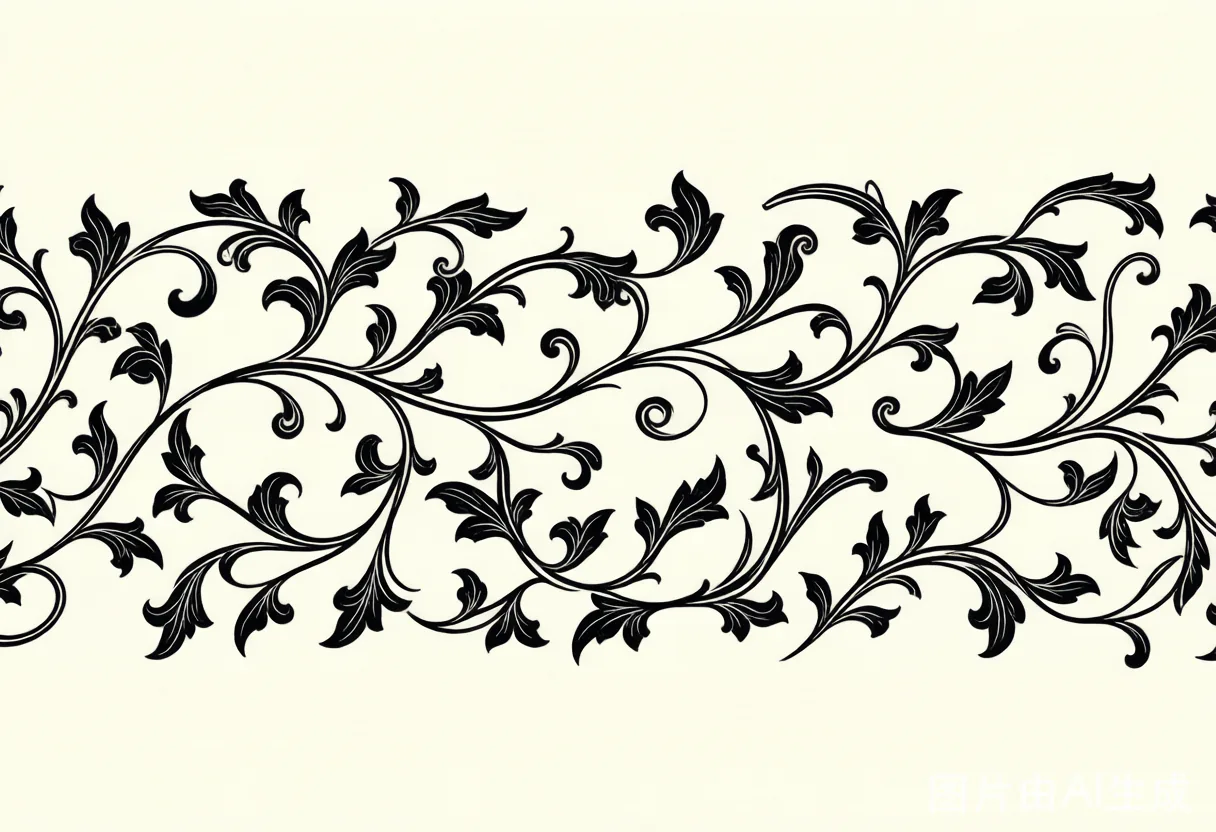
Border repeat — the vine flows endlessly left to right. No start, no end. This is “continuous” made physical.
Cover the entire surface.
The border repeat is extended into a full-field surface — the vine now runs in two directions, tiling seamlessly across the whole floor. This is the pattern that will be applied to the wood surface. Dense but ordered, the vine reads as a living ground from standing distance and as a crafted line up close.
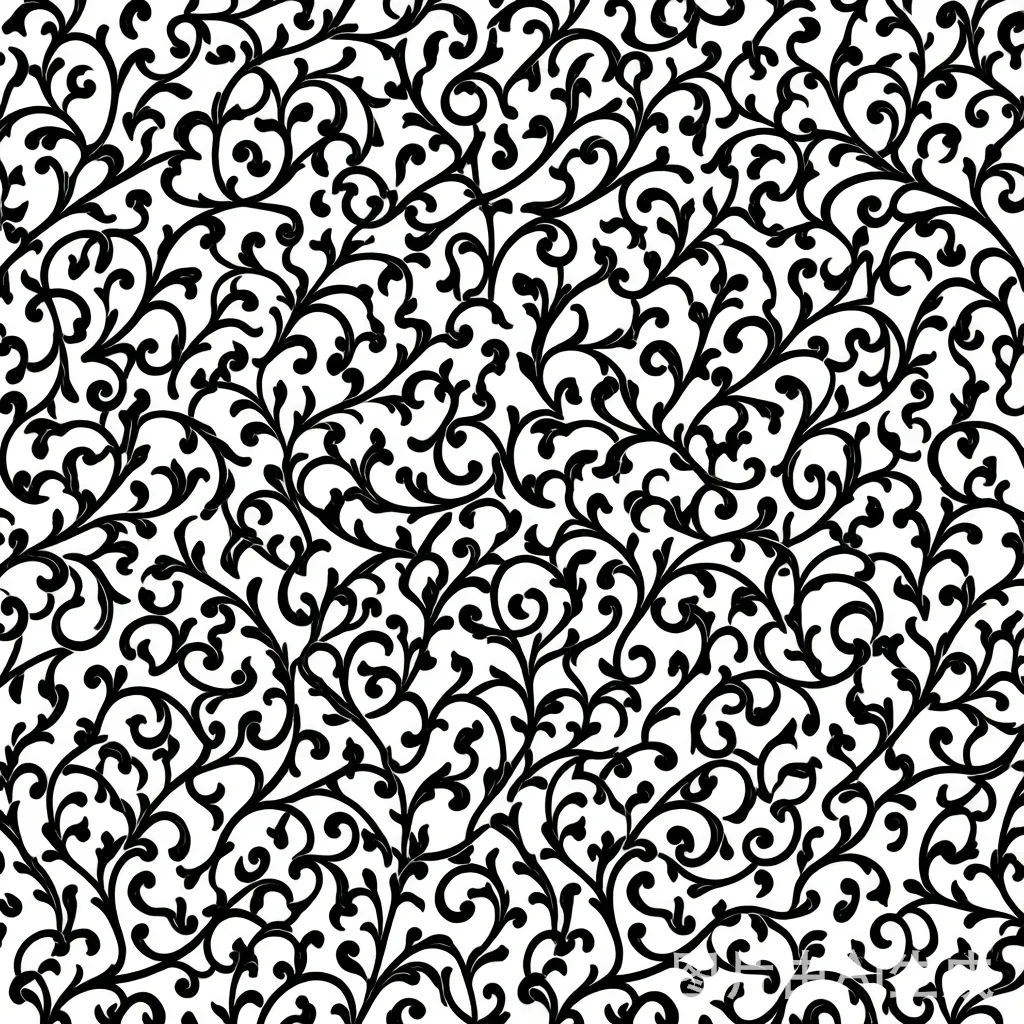
Full-field repeat — the vine covers the surface in all directions. This is the pattern that meets the wood.
One vine, four crafts.
The same vector pattern is applied to the wood floor surface through four craft techniques: carving (雕刻), embossing (压纹), UV printing (UV 打印) and parquet marquetry (拼花). Each craft bends the vine to its own physics — groove depth, relief height, ink resolution, veneer tolerance — but the vine identity survives all four.
Carving
The vine is CNC-routed into the wood surface as a groove. Shadow reads the line. Best for walnut and oak with tight grain — the carved groove holds shadow at any light angle.
Embossing
The vine is pressed into the wood as a raised relief. Touch reads the line. Best for engineered wood with a stable core — the relief survives foot traffic without flattening.
UV Printing
The vine is UV-printed onto the wood surface in antique gold and cream. Light reads the line. Best for full-color pattern applications where the vine needs a metallic or two-tone read.
Parquet Marquetry
The vine is built from different wood veneers and brass inlay — cream maple for the vine, brass for the line, walnut for the field. Craft reads the line. The highest expression of the vine on wood.
What the process proves.
This study takes traditional chan-zhi vine as its research object. Through image collection, motif extraction, geometric simplification, vector reconstruction and floor craft adaptation, it completes the translation of a traditional pattern into a modern wood floor surface design.
The three form features, preserved.
Throughout the process, three form features of the chan-zhi vine are treated as non-negotiable and preserved at every stage:
① Continuous · 连续 — The S-curve vine never starts or stops. In the vector, in the repeat, in the carved groove, the line flows without seam. This is the “endless growth” meaning made physical.
② Growing · 生长 — The vine always reaches forward. The leaf direction, the bud angle, the curve trajectory all preserve the sense that the pattern is alive and moving — not frozen, not stamped.
③ Twining · 缠绕 — The leaf pair curls around the vine. This “twining” is what separates chan-zhi from a generic scroll. Lose the twining and you lose the identity; keep it and the vine survives every craft.
Four crafts, one vine.
The same master vector drives four wood floor craft techniques — carving, embossing, UV printing and parquet marquetry. Each craft reads the vine differently (shadow, touch, color, material), but the vine identity is consistent across all four. This is the core of the translation: one pattern, many surfaces, one identity.
Why this matters for the Middle East.
The “continuous, growing, twining” form features of chan-zhi resonate directly with the Islamic geometric ornament tradition of “the infinite reflecting the infinite.” By preserving these features through the translation, the pattern arrives in a Middle Eastern interior not as a foreign motif, but as a cultural cousin — a vine the Arabesque eye already knows how to read.
See this vine on your floor.
Request a sample panel in any of the four craft techniques — or commission a custom vine translation for your project.
Frequently Asked Questions
What is the chan-zhi vine pattern?
The chan-zhi vine is a Chinese scrolling vine motif dating back over 1,300 years to the Tang dynasty, featuring a continuous S-curve with peony buds and curling leaves symbolizing endless growth.
How is a traditional pattern translated into modern surface design?
hi9 uses a nine-step process: image collection, motif extraction, element deconstruction, geometric simplification, vector reconstruction, border repeat, full-field repeat, floor craft adaptation, and design documentation.
Which wood floor crafts work with vine patterns?
Four crafts: carving (1.5-3.0mm grooves), embossing (0.5-1.2mm relief), UV printing (1200dpi), and parquet marquetry (4mm maple veneer with brass inlay).
Can Chinese vine patterns work in Middle Eastern interiors?
Yes. The chan-zhi vine shares visual DNA with Islamic arabesque. hi9 embeds the Chinese vine inside an Arabic eight-point star grid for Gulf audiences.
What materials can the vine pattern be applied to?
Six surface types: wood parquet flooring, wallcovering, brass inlay panels, ceramic and stone tile, rugs and textiles, and furniture panels.